Creosote Buildup: What Pittsburgh Homeowners Should Know
Expert chimney and fireplace service advice for Pittsburgh homeowners
Introduction
Creosote is a combustible residue created when wood smoke cools and condenses in the chimney. It can appear as powdery soot, flaky deposits or hard glazed material. The more difficult forms are not simply 'dirt'—they can represent a significant fire hazard and may require specialized removal methods.
Why creosote forms
Restricted airflow, wet wood, smoldering fires and cool flue temperatures all encourage creosote formation. Exterior masonry chimneys can stay colder than interior chimneys, especially during Pittsburgh winter weather, increasing condensation during startup and low-temperature burns.
Different deposits require different cleaning
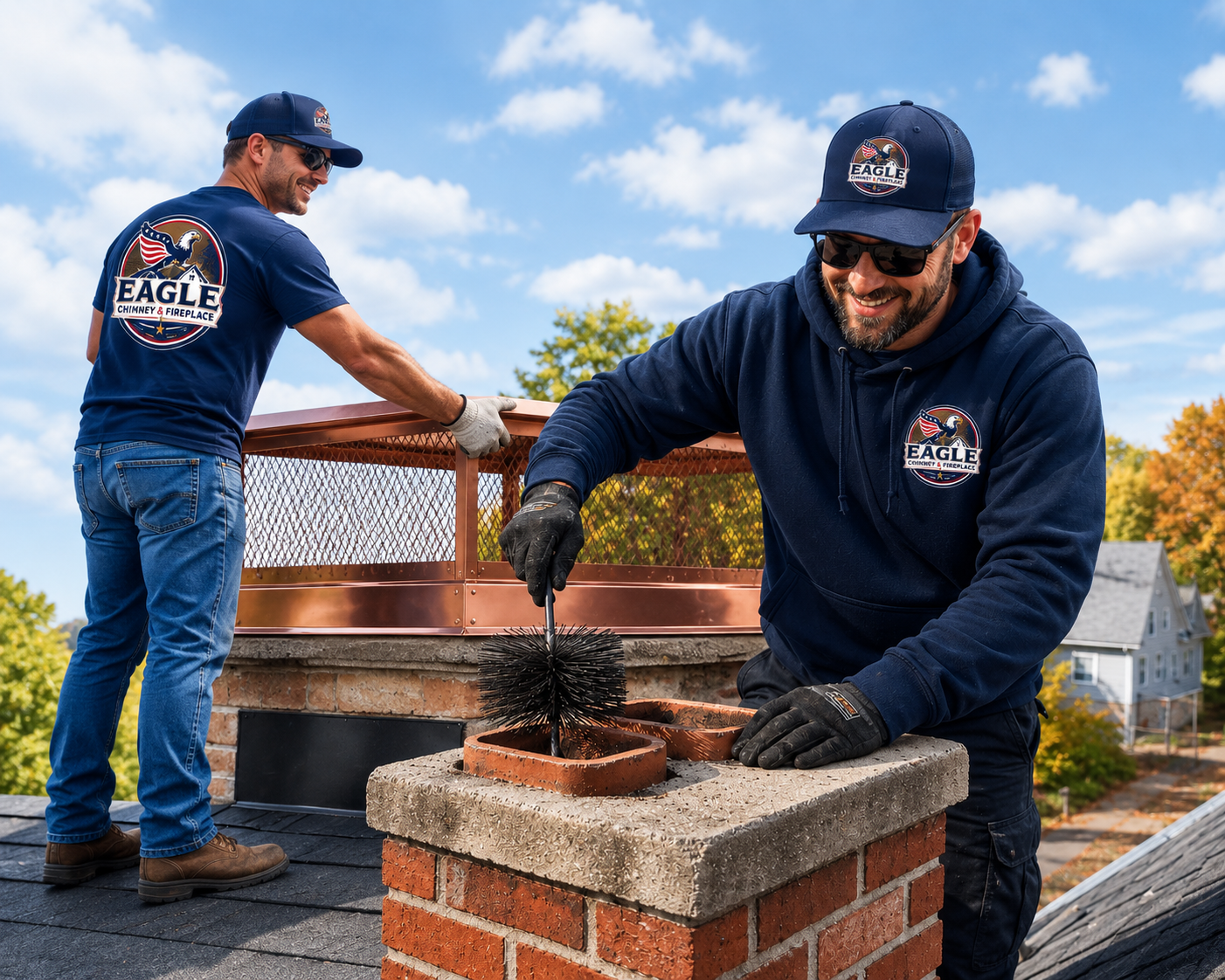
Loose soot and light creosote can often be removed by conventional sweeping. Thick, hardened or glazed deposits may need rotary tools or treatment methods designed for severe buildup. A technician should explain what type of deposit is present rather than treating every chimney the same.
How your burning habits change the rate of buildup
Dry firewood, adequate combustion air and hotter efficient fires generally create less creosote than wet wood and prolonged smoldering. EPA guidance also emphasizes seasoned firewood and annual professional maintenance. Homeowners who burn daily may need service more frequently than those who use the fireplace occasionally.
What happens after a chimney fire
A chimney fire can generate extreme heat that cracks clay liners, damages mortar and affects metal components. Some chimney fires are loud, while others may go unnoticed. If there is evidence of a past fire, the flue should be evaluated before further use.
When to Call Eagle Chimney & Fireplace
Stop using the fireplace or connected appliance if you see smoke entering the home, hear or suspect a chimney fire, notice loose masonry, find a blocked flue, smell combustion gases, or see water actively damaging the chimney. For routine maintenance, scheduling before the busiest part of fall gives more time to complete any masonry, liner, cap, crown or flashing work discovered during inspection.
For chimney cleaning, inspection, repair, installation or fireplace service in Pittsburgh and surrounding communities, contact Eagle Chimney & Fireplace at 412-954-1258. We serve homeowners throughout the Pittsburgh area and communities within approximately a 60-mile radius. Visit eaglechimneyandfireplace.com to learn more or request service.
Frequently Asked Questions
What does creosote smell like?
It often has a strong smoky, tar-like odor that may become more noticeable in humid weather.
Can creosote logs replace sweeping?
Chemical products do not replace inspection and mechanical removal when deposits are present.
How quickly can creosote build up?
It varies greatly with fuel moisture, fireplace design, draft and frequency of use.
Local SEO takeaway
For homeowners searching for creosote removal Pittsburgh, Eagle Chimney & Fireplace recommends diagnosing the actual chimney or fireplace system instead of treating every symptom as the same repair. Pittsburgh-area homes vary widely in age, masonry construction, roof access, fuel type and past renovations. A documented inspection helps separate cleaning, maintenance and water-control work from structural or venting repairs.
Schedule Service
Need help with a chimney or fireplace in Pittsburgh or the surrounding area? Call Eagle Chimney & Fireplace at 412-954-1258 or visit eaglechimneyandfireplace.com. Our service area extends approximately 60 miles around Pittsburgh, Pennsylvania.
---
Need Chimney or Fireplace Service?
Contact Eagle Chimney & Fireplace to schedule an inspection or repair in the Pittsburgh area.
CALL: 412-954-1258