Fireplace Insert Installation in Pittsburgh: Wood, Gas or Electric?
Expert chimney and fireplace service advice for Pittsburgh homeowners
Introduction
An open masonry fireplace creates ambiance, but it is not always an efficient heater. Homeowners who want more heat, easier operation or a cleaner look often consider an insert. Wood, gas and electric inserts serve different goals, and the existing chimney must be evaluated before assuming any unit will fit or vent correctly.
Wood inserts
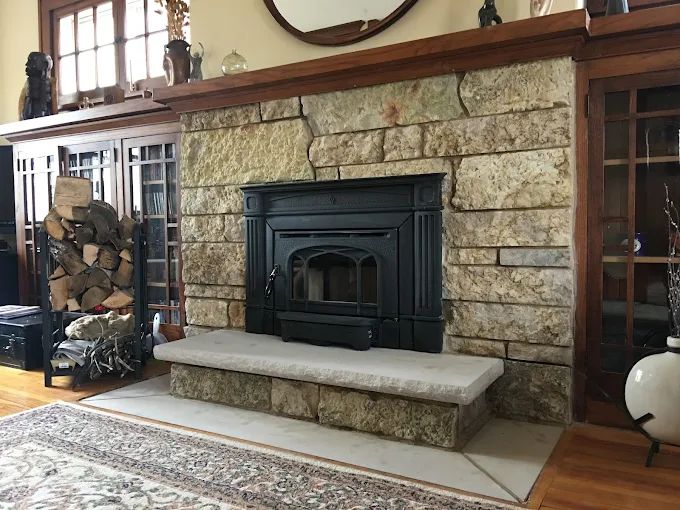
A wood insert places a high-efficiency wood-burning appliance inside or partly inside the existing fireplace. It generally requires a properly sized liner connected from the appliance to the chimney termination. Homeowners still need dry firewood, regular maintenance and chimney cleaning.
Gas inserts
Gas inserts offer thermostat-like convenience and controlled flames. Direct-vent models typically use dedicated intake and exhaust pathways, often routed through the chimney. Gas supply, venting, clearances and manufacturer specifications all need to be addressed during installation.
Electric inserts
Electric units do not require a combustion flue and are often simpler from a venting standpoint, though electrical requirements and fit still matter. They provide visual flame effects and supplemental heat but feel different from a combustion fireplace.
Inspect before you shop only by dimensions
Firebox width and height are only part of the fit. Chimney condition, liner path, hearth projection, mantel clearances, gas or electrical availability, and local code requirements can change which units are practical. Starting with inspection helps avoid choosing an appliance that cannot be installed correctly.
When to Call Eagle Chimney & Fireplace
Stop using the fireplace or connected appliance if you see smoke entering the home, hear or suspect a chimney fire, notice loose masonry, find a blocked flue, smell combustion gases, or see water actively damaging the chimney. For routine maintenance, scheduling before the busiest part of fall gives more time to complete any masonry, liner, cap, crown or flashing work discovered during inspection.
For chimney cleaning, inspection, repair, installation or fireplace service in Pittsburgh and surrounding communities, contact Eagle Chimney & Fireplace at 412-954-1258. We serve homeowners throughout the Pittsburgh area and communities within approximately a 60-mile radius. Visit eaglechimneyandfireplace.com to learn more or request service.
Frequently Asked Questions
Do I need a chimney liner for a gas insert?
Many gas inserts use a listed venting system through the existing chimney. The exact requirement depends on the model.
Are fireplace inserts more efficient than open fireplaces?
Modern listed inserts are generally designed to deliver more usable heat than a traditional open hearth.
Can an insert go into any old Pittsburgh fireplace?
Not automatically. The fireplace and chimney must be evaluated for size, condition and compatibility.
Local SEO takeaway
For homeowners searching for fireplace insert installation Pittsburgh, Eagle Chimney & Fireplace recommends diagnosing the actual chimney or fireplace system instead of treating every symptom as the same repair. Pittsburgh-area homes vary widely in age, masonry construction, roof access, fuel type and past renovations. A documented inspection helps separate cleaning, maintenance and water-control work from structural or venting repairs.
Schedule Service
Need help with a chimney or fireplace in Pittsburgh or the surrounding area? Call Eagle Chimney & Fireplace at 412-954-1258 or visit eaglechimneyandfireplace.com. Our service area extends approximately 60 miles around Pittsburgh, Pennsylvania.
---
Need Chimney or Fireplace Service?
Contact Eagle Chimney & Fireplace to schedule an inspection or repair in the Pittsburgh area.
CALL: 412-954-1258